Free Video Presentation · Neck & Skin Firmness Research
How to Tighten Neck Skin and Loose Skin Naturally:
Why Creams and Injections Keep Wearing Off
You’ve tried the firming cream. The retinol. Maybe the laser, the facial, or the injections that cost more than a car payment. For a few weeks, your neck and jawline looked better. Then the softness crept back. The lines across your neck came back. And the turtlenecks and scarves came back out of the closet.
Here’s a question almost nobody asks: what if loose skin isn’t a surface problem at all, but the visible sign of something your body quietly stopped making after 30?
In this free video, a dermatologist who built her career on needles, lasers and cosmetic procedures explains why she now believes most women are treating the wrong layer of their skin. She shows why a specific type of collagen, one most women have never heard of, may be the missing piece, and why a humble kitchen staple sits at the center of the natural approach she describes.

Plays right in your browser · No cost · No sign-up
Does This Sound Like You? Signs Your Skin Has Lost Its Inner Support
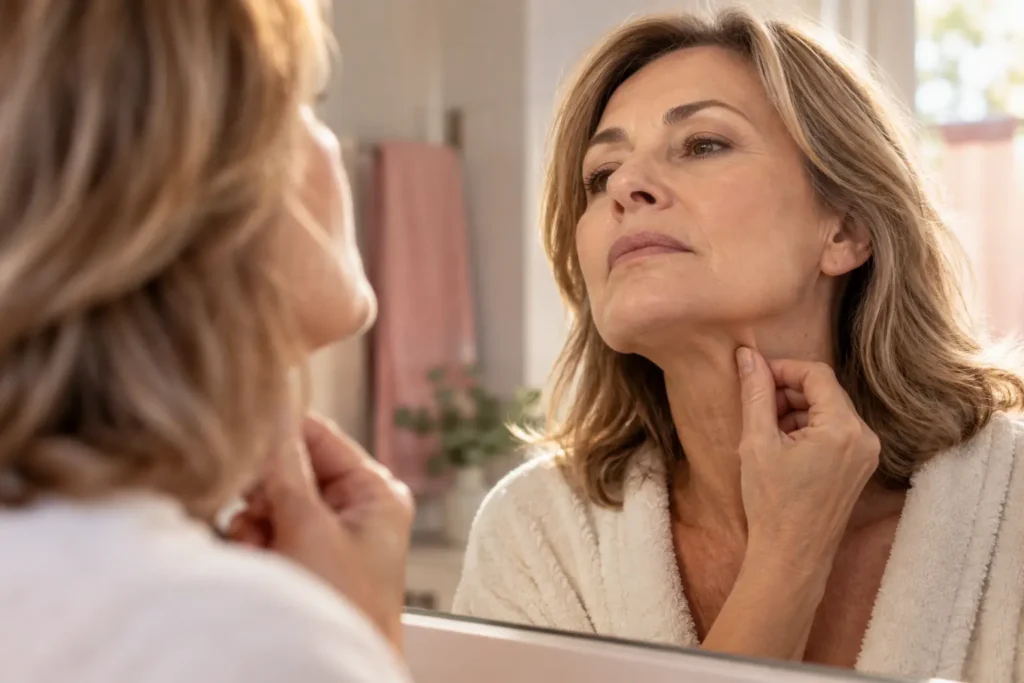
- Your neck looks softer and more crepey than your face, and you've started reaching for high collars and scarves
- Your jawline isn't as sharp as it used to be, and photos from certain angles make you wince
- Pillow creases that used to vanish in minutes now stay on your face until lunchtime
- Your foundation settles into lines around your mouth and across your forehead by midday
- When you pinch the back of your hand, the skin is slow to bounce back
- You've spent real money on serums, retinol, lasers or injections, and the results faded within weeks
Why Loose Skin Keeps Coming Back, and Why Most Fixes Only Touch the Surface
Think of the firmness in your skin as the beams inside a house. You can’t see them, but they hold everything up. That support structure is collagen, and it lives deep beneath the surface, far below where creams and serums ever reach.
What almost nobody explains is that there isn’t just one collagen. There are several types, and according to the dermatologist, only one of them is responsible for the firm, springy skin you had in your 20s. It’s the same kind that makes a baby’s skin bounce right back when you squeeze it.
The video spends most of its time on the next point. She explains why the problem may not be how much collagen you have, but which type your body has stopped producing.
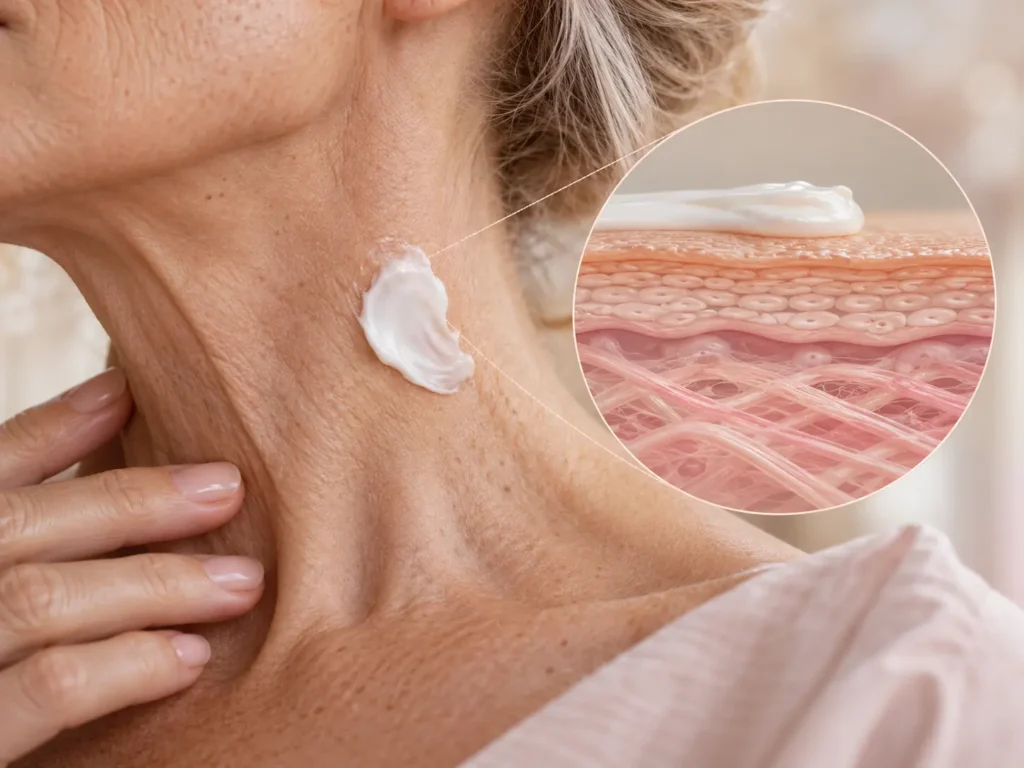
The Surface
Trap
Creams and retinol mostly work on the top layer of your skin. The dermatologist compares it to sanding and varnishing the top board of a floor while the beams underneath keep weakening. And collagen creams face another problem: she shows why the molecule is too large to get through your skin at all.

Why Collagen Powders May Miss the Mark
When you swallow collagen, your body treats it like food and sends it everywhere. The dermatologist uses a simple jar-of-water demonstration to show why so little may reach your face or neck, and why most jars on the shelf contain a type of collagen your body mainly uses to patch scars.
The “Borrowed Firmness” Cycle
Injections and fillers push firmness in from the outside, and the change can be fast. But she explains why that firmness is borrowed: when it wears off, the skin underneath hasn’t rebuilt anything, and some women say they look softer than before. She calls it the yo-yo effect.
WHAT THE PRESENTATION COVERS
Type III collagen, which the dermatologist calls “the collagen of youth.” She explains why she believes the real difference between skin at 25 and skin at 55 comes down to this one type, why the body produces less of it after 30 and even less after menopause, and why that may be what lets the neck and jawline go soft. You'll see the kitchen-counter demonstrations she uses to make her case, including a gelatin test that shows firm, supported skin next to skin without that support, so you can weigh the evidence for yourself.
The 4 Stages of Loose, Sagging Skin: Where Are You Right Now?
Loose skin rarely happens overnight. It creeps in so gradually that it's easy to blame on sleep, stress or lighting. See which stage sounds most like the woman in your mirror:
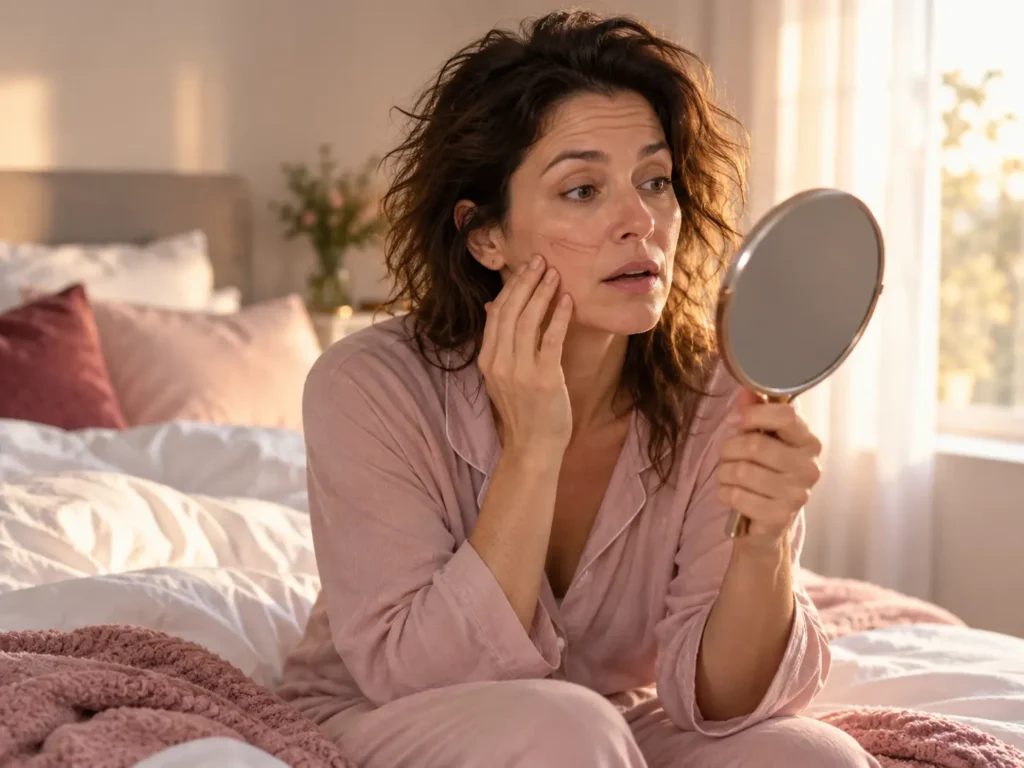
The First Softening
Pillow creases linger. Makeup settles into fine lines. Your skin just seems a little slower to bounce back than it used to. Easy to blame on a bad night's sleep.

The Neck Gives It Away
Lines appear across your neck. The skin under your chin feels softer. Your jawline starts to blur, and you catch yourself tilting your head up for every photo.

The Cover-Up Years
Turtlenecks, scarves and high collars become a habit. You try the serums and the procedures. They help for a few weeks, then everything slides right back.

The Mirror You Avoid
Jowls, loose neck skin, softer skin on your chest and hands. You step out of photos and look away from mirrors. You're done covering it up. You want a real explanation.
Whichever stage sounds like you, the video explains what your current routine may be missing entirely, and why the dermatologist says it matters at every age.
Why Fillers and Injections Often Bring Only Temporary Firmness
Fillers, injections and lasers can change how skin looks, sometimes quickly. If you’re under a dermatologist’s care, keep following their advice.
But the dermatologist in this video, who performed these procedures for years, raises a question that stops a lot of women cold. If these treatments truly fixed loose skin, why do they have to be repeated every few months, and why does the skin sometimes look softer once they wear off?
Her answer is that they work from the outside, while the support your skin lost was built from the inside. That’s the heart of this presentation: the mechanism she believes sits behind loose neck and facial skin, and a natural daily approach designed to support your body’s own collagen production instead of borrowing firmness for a few months at a time.
The Pantry Staple (and the Island Secret) at the Heart of This Approach
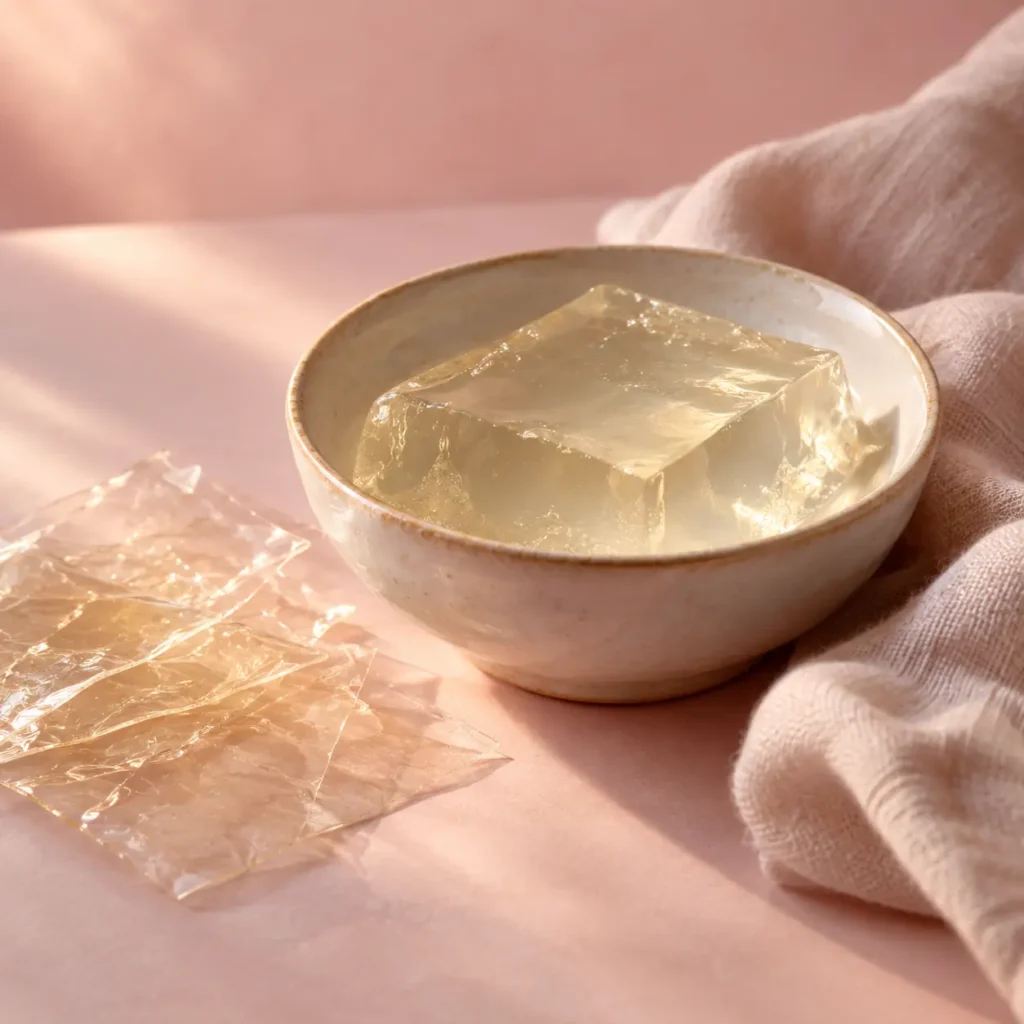
You’ve almost certainly had it in your kitchen: plain gelatin. Most people think of it as a dessert ingredient. The dermatologist sees something very different, because gelatin is naturally rich in two amino acids she describes as the building blocks of the collagen your skin has been missing.
In the presentation, she explains why the sugary boxes at the supermarket aren’t what she means, why a specific kind of gelatin connected to women on a volcanic Korean island is different, and why she pairs it with three more natural ingredients in a precise combination.
No needles. No lasers. No 10-step routine. The approach described in the video fits into a few seconds of your day.
Find a quiet moment. The full explanation is worth watching from start to finish.
Common Questions Before You Watch
No. The approach in the video focuses on what happens beneath the skin, not on the surface. No needles, no lasers, no creams, and nothing that requires an appointment.
The presentation was made with women 50, 60 and beyond in mind. The dermatologist explains why she believes the drop in collagen after menopause matters so much, and why she says age alone doesn’t close the door.
Yes. The dermatologist spends time on the neck, jawline, chest and hands, the areas she says often show age first and that most facial treatments overlook.
Yes. The video covers the “yo-yo effect” many women notice after injections wear off, and explains why she believes supporting the body’s own collagen is a different path.
The presentation references published research on collagen and on each natural ingredient it discusses. Watch, look at what’s presented, and talk it over with your doctor.
No. Don’t stop or change any treatment your doctor or dermatologist recommended without talking to them first. This video is educational and is not a substitute for professional care.
Everyone is different, and results vary. The dermatologist explains the timeline she describes, and why she says real change in skin structure is measured in months, not days.
Privacy Policy | Terms of Service | Disclaimer | Contact